Creating an Inclusive Playground for SEN & Special Schools
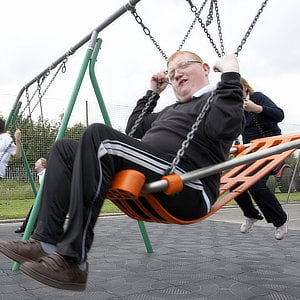
Creating an inclusive playground for SEN and special schools means designing a single space where disabled and non-disabled children can play together, built on seamless accessible surfacing, wheelchair-accessible and transfer-friendly equipment, sensory and calming zones, and a clear, predictable layout. True inclusion goes beyond ramps and minimum compliance: it removes barriers so every child, whatever their physical, sensory or cognitive needs, can join in alongside their peers.
Lay seamless, accessible surfacing throughout
Surfacing is the foundation of an accessible playground because it determines who can move freely across the site. Choose smooth, firm, seamless surfaces such as wet pour rubber that let wheelchairs, walking frames and unsteady walkers travel without catching on edges, gaps or loose fill. Keep gradients gentle, avoid abrupt level changes, and provide accessible routes that connect every zone rather than stopping at the playground edge. Impact-absorbing playground surfacing should still meet BS EN 1177 beneath equipment, with the specification matched to the critical fall height. Contrasting colours and textures can also help children with visual impairments read the space and find their way.
Choose wheelchair-accessible and transfer-friendly equipment
Inclusive equipment offers different ways to take part, so a child can join in whether they stay in their wheelchair or transfer out of it. Look for wheelchair-accessible items such as roundabouts and raised sand or water tables at seated height, ground-level play that needs no steps, and wide ramped access onto raised structures. Transfer-friendly features, including supportive seats, back rests and comfortable grab points, help children move from a wheelchair onto swings or platforms. The aim is a range of play equipment that presents the same experience through several routes, so no child is left watching from the side. Aim for challenge at every level, from ground-level activities to more adventurous elements, so children of differing abilities all find something that stretches them.
Include sensory and calming zones
Sensory provision supports children who seek stimulation and those who need to regulate and calm down. Sensory play can offer sound, texture, colour, light, movement and cause-and-effect features that invite exploration and communication. Just as important is a quiet, low-stimulation retreat where an overwhelmed child can withdraw, so plan a calming zone with soft seating, planting, shade and shelter away from the busiest, noisiest areas. Thoughtful sensory play benefits children with autism, sensory processing differences and profound and multiple learning difficulties, and enriches play for everyone. Offering both stimulating and calming spaces lets each child find the level of input that suits them.
Design clear sightlines and predictable layouts
A calm, legible layout helps children who find busy or unpredictable environments distressing. Keep the plan simple and consistent, with defined zones, obvious pathways and clear boundaries between active and quiet areas, so children can anticipate what happens where. Strong sightlines let staff supervise the whole space and step in quickly, which matters greatly in special-school settings. Reduce pinch points and blind corners, use colour and landmarks to aid orientation, and keep routes wide enough for wheelchairs and walking frames to pass. Predictability reduces anxiety and helps children move around independently and confidently.
Meet the Equality Act duty and go beyond minimum compliance
Schools have legal duties under the Equality Act 2010, including making reasonable adjustments and, for maintained schools and academies, planning to improve access to the physical environment over time. A playground that merely meets a minimum, however, can still exclude in practice, offering a token accessible item beside equipment most disabled children cannot use. Genuine inclusion treats accessibility as the starting point of the design brief rather than an add-on, ensuring the whole space, not one corner of it, welcomes every child. Purpose-designed inclusive and SEN play spaces are built around this principle from the outset.
Design so disabled and non-disabled children play together
The goal of an inclusive playground is shared play, not separate provision. Design so children of all abilities use the same equipment and zones side by side, encouraging cooperation, communication and friendship rather than segregating disabled children into a distinct area. Features that support parallel and cooperative play, such as wide slides, group swings, roundabouts and interactive panels, let children play together on equal terms. When inclusion is designed in from the first sketch, the playground becomes a place where difference is unremarkable and every child belongs.
An inclusive playground rewards careful, joined-up design, and it helps to work with a team that understands SEN and special-school needs. With 25 years' experience delivering accessible surfacing, inclusive equipment and sensory spaces to BS EN 1176 and BS EN 1177, we can help you create somewhere every child can play together. Contact us for a free, no-obligation site visit, design and quote, or call 0121 405 0336.
Related questions
What surfacing is best for a wheelchair-accessible playground?
A smooth, firm, seamless surface such as wet pour rubber is usually best, because it lets wheelchairs and walking frames move freely with no gaps or loose fill, while still absorbing impacts to BS EN 1177 beneath equipment. The right choice depends on your budget, drainage and the equipment above it, which a free site visit can help you weigh up.
How is an inclusive playground different from a standard accessible one?
A standard accessible playground may meet minimum requirements with a ramp or a single accessible item, while an inclusive playground is designed from the outset so disabled and non-disabled children play together across the whole space. Inclusion considers surfacing, equipment, sensory needs, calming areas and layout together, rather than treating access as an add-on.
More from the blog
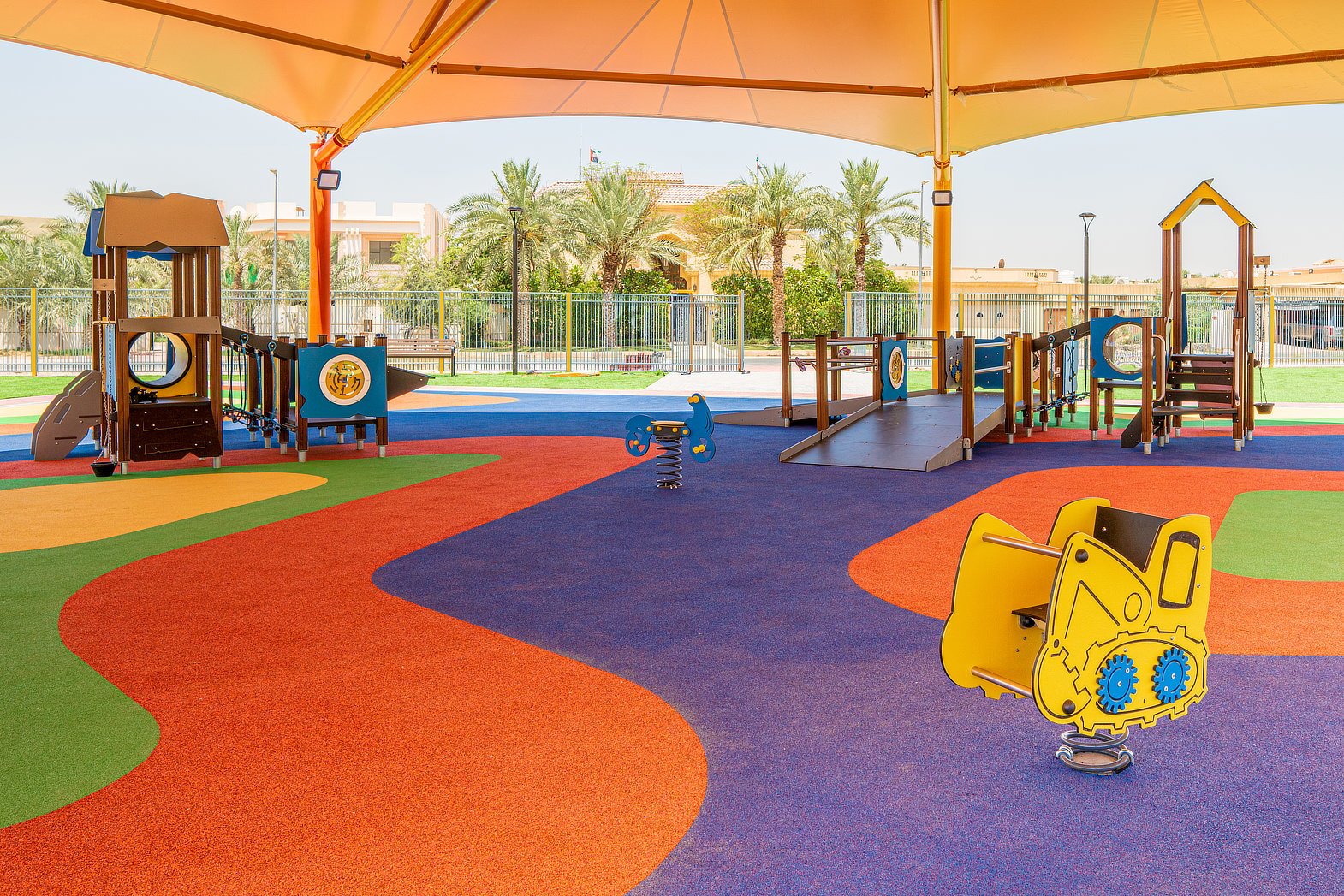
Playground Design Ideas for Schools
Great playground design starts with zoning your space for active, quiet and imaginative play. Here are practical design ideas for schools, by area and age.
Read article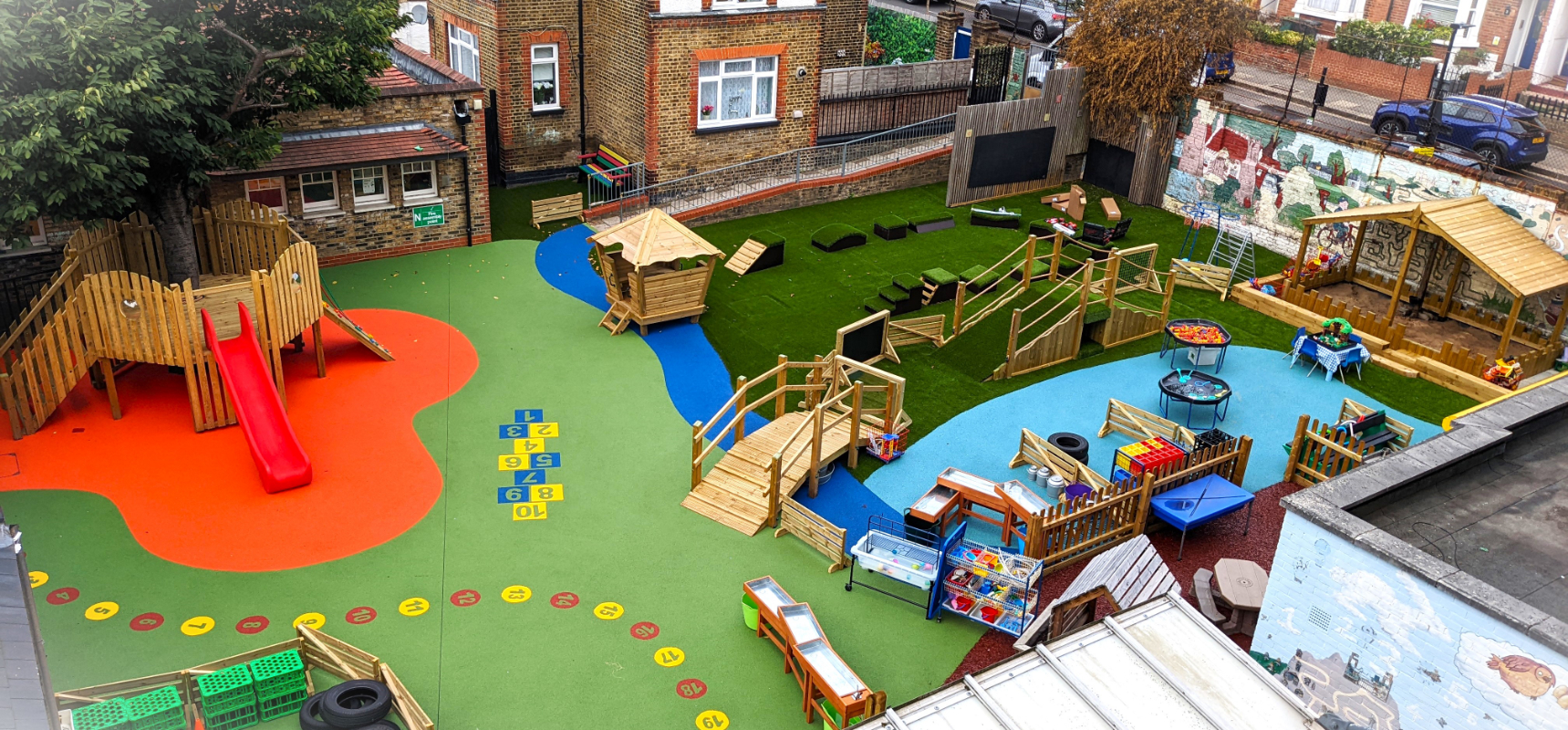
What is a MUGA Pitch? Multi-Use Games Areas Explained
A MUGA is a multi-use games area that lets one space host football, netball, basketball and more. Here is what a MUGA is, and how to plan one for your school.
Read article
How to Fund a New School Playground: UK Funding Routes
A practical guide to funding a new UK school playground, from capital budgets and the PE & Sport Premium to grants, fundraising and phasing.
Read article